

Plain-language summaries of how sleep cycles, light, and habits interact—for general education, not personalised medical guidance.
A night includes multiple cycles of NREM (light and deep) and REM sleep, each roughly ninety minutes. Deep NREM supports physical recovery and immune function; REM supports memory integration and emotional processing. Awakenings between cycles are normal—you may not remember them.
Short total sleep trims REM toward morning hours, which can leave dreams sparse and mood flatter. Fragmented sleep—from noise, alcohol, or apnea—reduces deep stages even if time in bed looks long. Subjective unrest often tracks fragmentation more than clock hours.
Tracking apps estimate stages via movement and heart rate; treat them as trends, not lab precision. A simple diary—bedtime, wake time, awakenings, alertness rating—often suffices.

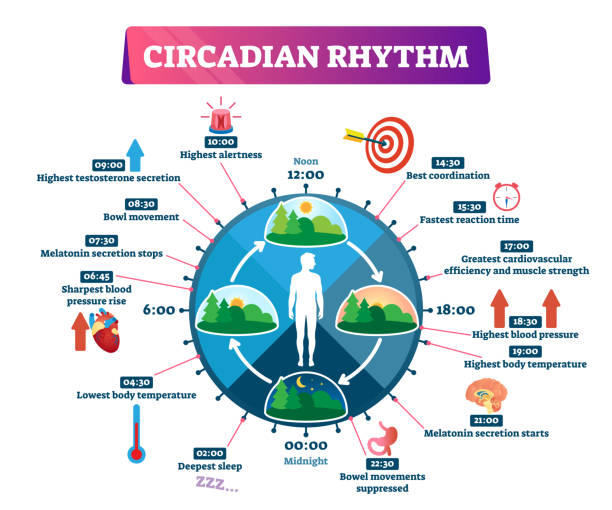
Your suprachiasmatic nucleus coordinates roughly twenty-four-hour rhythms using light signals through the eyes. Morning bright light advances alertness; evening blue light delays melatonin. In the Netherlands, seasonal changes are strong—commute in dark winters, late sunsets in summer.
Strategies: outdoor light within an hour of waking (even cloudy), dim warm light after dinner, consistent meal timing. Shift workers face harder alignment; strategic naps and dark sleeping environments become essential tools discussed with occupational health when available.
Melatonin supplements are regulated; some people use low doses under clinician guidance. Behavioral light hygiene remains the first-line experiment for most healthy adults.
Meta-analyses on cognitive and behavioural sleep interventions often discuss stimulus control and sleep restriction therapy in the context of professional programmes for chronic insomnia. For general populations, combined hygiene—regular schedule, daytime movement (avoiding late vigorous exercise), caffeine timing, and a quiet cool bedroom—is frequently studied; self-reported sleep quality changes vary between individuals.
Relaxation techniques (PMR, breath training, imagery) add value especially when rumination dominates. Worry time earlier in the evening—writing concerns and next steps on paper—reduces bed-linked problem solving.
“Sleep is a behavior shaped by context; change the context patiently before labeling yourself a ‘bad sleeper.’”
Population studies link habitual short sleep with metabolic and cardiovascular risk over years—not from one exam-season week, but from chronic patterns. This is why sustainable routines matter more than heroic one-night efforts.
These patterns deserve assessment by a qualified sleep clinician or GP in the Netherlands. Our guides do not replace professional assessment or care. They support general lifestyle education alongside qualified services when you need them.
Contact us| Date | Topic | Format |
|---|---|---|
| Wed 16 Jul 2026 | Summer light & sleep habits | Online talk — request link |
| Thu 4 Sep 2026 | Sleep diary workshop | Utrecht — register |